Ayurvedic Hair Care · Pillar Guide
The Complete Guide to Ayurvedic Hair Oiling for Hair Growth
A centuries-old ritual, explained the modern way – which oils to use, how to apply them, how often, and how to build a routine that actually fits your life.
- 🕐 14 min read
- 🌿 Ayurvedic Hair Care
- ✔ Reviewed for accuracy
On This Page
Prefer a lightweight, no-rinse option for in-between days?
There’s a particular Sunday-morning memory a lot of us share: sitting on the floor, a grandmother or aunt working warm oil into the scalp section by section, the smell of coconut or sesame oil lingering for the rest of the day. It felt like a ritual because it was one – and it turns out the habit behind it holds up remarkably well, even under a more modern, evidence-informed lens.
Somewhere between that memory and today, most of us stopped oiling regularly. Life got busier, hair-washing routines got simplified, and “oiling” became something we mean to do “this weekend” and rarely actually schedule. This guide is meant to close that gap – not with vague tradition, but with a clear, practical explanation of what Ayurvedic hair oiling actually does, which oils make sense for which hair, and exactly how to build a routine you’ll keep.
🔑 Key Takeaway
Hair oiling doesn’t speed up how fast hair grows from the follicle, but it meaningfully reduces breakage, dryness, and scalp irritation – the three things that most often make hair look like it isn’t growing at all.
What Is Ayurvedic Hair Oiling?
Ayurvedic hair oiling, sometimes called champi or oil massage, is the practice of applying warmed herbal-infused oil to the scalp and hair, combined with a gentle massage, then allowing it to sit before washing out. It’s one of the oldest documented hair care practices in Ayurveda, rooted in the idea that the scalp –
like skin elsewhere on the body – benefits from regular nourishment, not just occasional cleansing. Traditionally, oils were infused with herbs like bhringraj, amla, or hibiscus over low heat, cooled, and then massaged in using specific hand movements believed to calm the nervous system as much as condition the hair. Modern practice keeps the core idea – nourish, massage, let it absorb, wash out – while adapting frequency and technique to fit real, busy schedules.
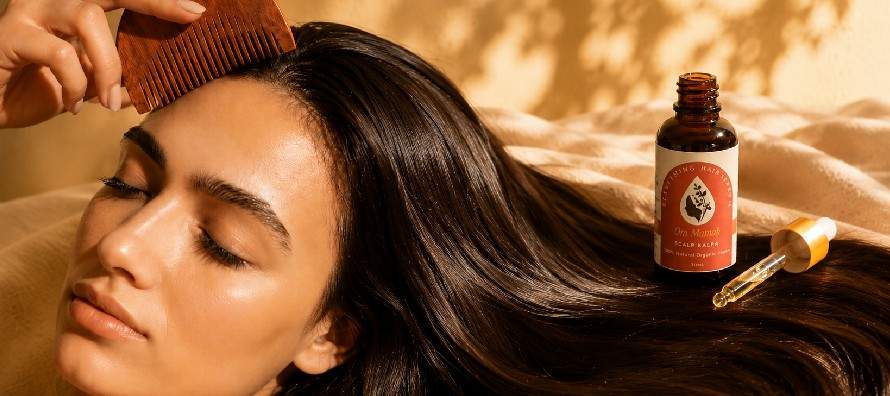
Why Oiling Works: Tradition Meets Evidence
It’s worth being precise here, because this is where a lot of hair-growth content overpromises. Hair grows from follicles beneath the scalp, and no topical oil changes the underlying rate of that biological process. What oiling can genuinely support is everything that determines whether the hair you’re already growing survives long enough to show length and thickness:
- Reduced friction and breakage: Oil coats the hair shaft, making strands more pliable and less prone to snapping during brushing, tying, or sleeping.
- Improved scalp condition: A dry, flaky, or tight scalp is a poor environment for healthy hair. Oiling helps restore moisture and comfort.
- Circulation support through massage: The massage component - not the oil alone - is linked in early research to modestly improved hair thickness over time.
- Reduced everyday damage: Detangling is gentler and less likely to cause split ends when hair is lubricated beforehand.
⚠ A note on claims:
If a hair oil promises to “double growth speed” or “regrow hair” in a fixed number of weeks, treat that claim with skepticism. Genuine hair loss – thinning, bald patches, receding hairlines – can have hormonal, genetic, or medical causes and deserves evaluation from a dermatologist, not just a new oil.
Oiling doesn’t grow hair faster. It protects the hair you’re already growing long enough to see the difference.
Choosing the Right Oil for Your Hair and Scalp
Not every oil suits every head of hair, and this is usually where people either overcomplicate things or default to whatever’s on sale. A simpler approach: match the oil’s weight and properties to your hair’s texture and your scalp’s tendencies.
| Hair / Scalp Type | Look For | Good Base Oils |
|---|---|---|
| Fine or oily scalp | Lightweight, fast-absorbing, non-greasy residue | Sesame oil, light coconut oil, grapeseed oil |
| Dry or coarse hair | Richer, deeply moisturizing, slower to absorb | Castor oil, coconut oil, olive oil blends |
| Thinning or shedding-prone | Scalp-focused, traditionally used for follicle health | Bhringraj oil, amla oil |
| Dandruff-prone or itchy scalp | Naturally antimicrobial, cooling properties | Neem-infused oil, coconut oil |
| Color-treated hair | Nourishing without stripping color, gentle | Coconut oil, argan oil blends |
Did You Know?
Key Ayurvedic Ingredients Worth Knowing
Most traditional hair oils aren’t a single ingredient – they’re a base oil infused with one or more of the following, each carrying its own traditional role:
Bhringraj
Often called the “king of hair” in Ayurvedic texts, bhringraj is traditionally used to support scalp health and is one of the most common herbs infused into hair-growth-focused oils.
Amla (Indian Gooseberry)
Rich in antioxidants, amla is traditionally valued for strengthening hair and supporting scalp nourishment, and is a common pairing with bhringraj in classic formulations.
Neem
Known for its naturally antimicrobial properties, neem is traditionally used for scalp conditions like dandruff and itchiness rather than growth specifically – which is also why neem wood combs are used alongside oiling, to support scalp hygiene between washes.
Castor Oil
A thick, viscous oil valued for its coating and moisturizing properties, particularly for dry ends and coarse textures. Its thickness means a little goes a long way – it’s rarely used alone.
Sesame Oil
A traditional Ayurvedic base oil in its own right, valued for penetrating the hair shaft and for its warming quality in Ayurvedic theory, often used as the carrier oil that herbs are infused into.
How to Oil Your Hair the Right Way: Step-by-Step
Technique matters as much as the oil itself. Here’s a routine that works whether you’re oiling weekly or twice a week.
1
Warm the oil
Gently warm oil (not hot) – this helps it spread evenly and absorb more comfortably into the scalp.
2
Section and apply
Part hair into sections and apply oil directly to the scalp first, then work through mid-lengths and ends.
3
Massage in circles
Use fingertips (not nails) in slow circular motions for 5-10 minutes to support circulation and relaxation.
4
Let it sit
Leave for at least 30-60 minutes, or overnight with a towel wrap, before washing thoroughly.
🌿 Expert Tip
Detangle hair gently with a wide-tooth comb before oiling, not after. Working oil through already-tangled hair increases friction and can cause more breakage than the oiling session prevents.
Overnight Oiling vs. Short-Duration Oiling
| Method | Best For | Consideration |
|---|---|---|
| Overnight (6-8 hrs) | Very dry, coarse, or damaged hair | Use a towel or old pillowcase to protect bedding |
| 30-60 minutes | Most hair types, regular maintenance | Easier to fit into a weekly routine consistently |
| Under 30 minutes | Fine or oily scalp, quick refresh | Lighter oils absorb faster and still offer benefit |
How Often Should You Oil Your Hair?
There’s no single right frequency – it depends on your hair type, climate, and how your scalp responds. As a general starting point:
- Dry or coarse hair: 2-3 times per week supports ongoing moisture needs.
- Normal hair: 1-2 times per week is usually enough to maintain benefits.
- Fine or oily hair: Once a week, focusing more on lengths than roots, prevents buildup.
- Dandruff-prone scalp: Consistency matters more than frequency - a steady weekly rhythm with a neem-infused oil tends to help more than sporadic heavy applications.
Myth vs. Fact
Myth
More oil means faster hair growth.
Fact
Excess oil left too long or applied too often can clog follicles and weigh hair down without adding any growth benefit.
Myth
Oiling before every wash is necessary for healthy hair.
Fact
Two to three sessions a week is enough for most people – daily oiling isn’t required and can be counterproductive for oilier scalps.
Myth
Hair oil can reverse genetic hair loss.
Fact
Oiling supports the health of existing hair but doesn’t address hormonal or genetic hair loss, which requires a dermatologist’s guidance.
Common Mistakes People Make When Oiling
- 1 Applying oil to dirty, product-heavy hair - oil binds with existing buildup rather than reaching the scalp cleanly.
- 2 Using too much oil - a little goes further than expected, especially with thicker oils like castor.
- 3 Massaging too aggressively with nails - this can irritate rather than stimulate the scalp.
- 4 Skipping the wash-out step for days - leaving oil in too long invites dirt and buildup rather than added benefit.
- 5 Expecting overnight results - hair growth cycles are measured in months, not days; consistency over 8-12 weeks is what shows real change.
Quick Pre-Oiling Checklist
- Hair is detangled with a wide-tooth or neem comb before applying oil
- Oil is warmed gently, not heated until hot
- Scalp is massaged in circular motions for 5–10 minutes
- Time is set aside - 30 minutes minimum before washing
- A gentle, sulfate - conscious shampoo is used to wash out fully
Building a Complete Ayurvedic Hair Ritual
Weekly oiling is the foundation, but it isn’t meant to be the only thing you do for your hair between wash days. A complete Ayurvedic-inspired routine usually layers three habits: a deep, wash-out oil session once or twice a week, gentle daily detangling with a natural-material comb, and a lighter, leave-in step for the days in between when a full oiling session isn’t practical.
This is where a lightweight hair serum earns its place – not as a replacement for oiling, but as the connective habit that carries scalp care through the rest of the week. Om Mamah’s Scalp Kalpa Hair Serum was formulated for exactly that gap: a fast-absorbing, no-rinse option you can use on non-oiling days to support scalp comfort without committing to a full wash-out routine every time.
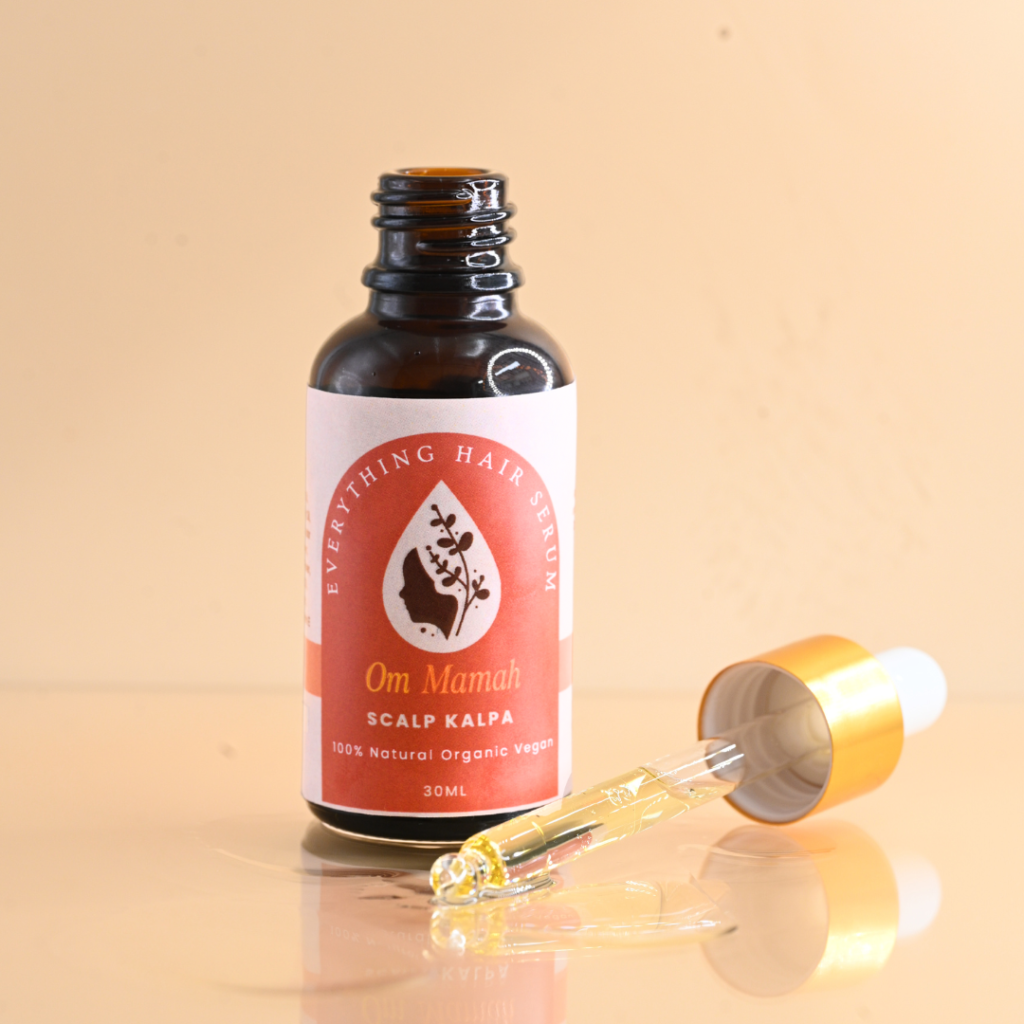
Scalp Kalpa 2-in-1 Hair Serum
A lightweight, Ayurvedic-formulated serum designed to fit between full oiling sessions – apply directly to the scalp, no rinse required.
Pair that with a neem wood comb for daily detangling – neem’s naturally antimicrobial surface and wide, gentle teeth reduce static and breakage in a way plastic combs typically don’t – and you have a routine that covers wash day, in-between days, and daily maintenance without requiring hours of effort each week.
Complete the Ritual
Build your weekly Ayurvedic hair care routine
Explore Om Mamah’s Scalp Kalpa Hair Serum and Neem Comb – designed to support the routine outlined in this guide.
Frequently Asked Questions
Most hair types do well with oiling two to three times per week. Very dry or coarse hair can handle more frequent oiling, while fine or oily hair often does better with once or twice a week to avoid buildup at the roots.
Before washing is the traditional and generally preferred approach. Oiling pre-wash lets the oil sit on the hair and scalp for a meaningful stretch of time, and washing afterward removes excess oil rather than leaving hair looking greasy all day.
Overnight oiling gives the oil more time to soften the hair shaft and coat the scalp, but it isn't strictly necessary for benefit. A well-done 30 to 60 minute application before washing can be just as effective for most people, and is easier to stick with consistently.
Hair oiling doesn't change the biological rate at which hair grows from the follicle. What it can do is reduce breakage, improve scalp condition, and support the hair you already have, which often makes hair look and feel like it's growing faster because less of it is snapping off.
There isn't one universally "best" oil - bhringraj and amla are traditionally favored for scalp health, castor oil for its thickness and coating properties, and coconut and sesame as effective, well-absorbed base oils. Many Ayurvedic routines blend several rather than relying on just one.
Leaving oil in for multiple days without washing can trap dirt, sweat, and product buildup against the scalp, which may lead to irritation or clogged follicles over time. It's generally better to oil, let it sit for a set period, and then wash it out at your next scheduled wash.
Oiling can support a healthier scalp environment and reduce mechanical breakage from dryness and friction, both of which contribute to visible hair fall. It does not address hair loss caused by hormonal, genetic, or medical conditions, which need a dermatologist's evaluation.
Use a measured amount rather than saturating the hair, focus application at the scalp and mid-lengths rather than the very ends only, and wash thoroughly with a proper double-cleanse if needed. Overuse of oil, not oiling itself, is usually what causes lingering greasiness.
Daily oiling isn't necessary for most people and can lead to product buildup at the scalp, which may trap dirt and slow rather than help scalp health. Two to three times a week is a more sustainable frequency for most hair types.
Traditional hair oil is typically heavier and meant to be left on for a set period before washing out. A hair serum is usually lighter, faster-absorbing, and designed to be used more flexibly - including on days you're not doing a full oiling ritual - to support the scalp and reduce frizz without a wash-out step.
Scalp massage is thought to support circulation to hair follicles, and small studies have observed improvements in hair thickness with consistent scalp massage over several months. It's a low-risk, evidence-informed habit worth combining with oiling rather than a guaranteed growth solution on its own.
Yes, but the oil choice and frequency should be adjusted to hair type. Fine or oily hair benefits from lighter oils used less often, while coarse, dry, or curly hair typically tolerates richer oils and more frequent application.
Final Takeaway
Ayurvedic hair oiling has survived for centuries not because it’s a miracle growth treatment, but because it works on the things that actually determine how healthy hair looks over time: less breakage, a calmer scalp, and hair that’s strong enough to hold onto the length it’s already grown. Choose an oil suited to your hair type, apply it with intention, give it real time to work, and pair it with lighter daily habits – like a leave-in serum and a gentle comb – for the days a full ritual isn’t practical.
None of this needs to be complicated. It just needs to be consistent.
This article is for general educational purposes and reflects a combination of traditional Ayurvedic practice and evidence-informed hair care guidance. It is not a substitute for medical advice. For hair loss with a suspected hormonal, genetic, or medical cause, consult a board-certified dermatologist. For further reading, see resources from the American Academy of Dermatology and peer-reviewed dermatology research on scalp massage and hair fiber health.