Sandalwood & Lime vs. Cocoa & Café: Which Om Mamah Ubtan Is Right for You?
- 🕐 13 min read
- 🌿 Ayurvedic Skincare
- ✔ Based on verified product ingredients
💬 Quick Answer
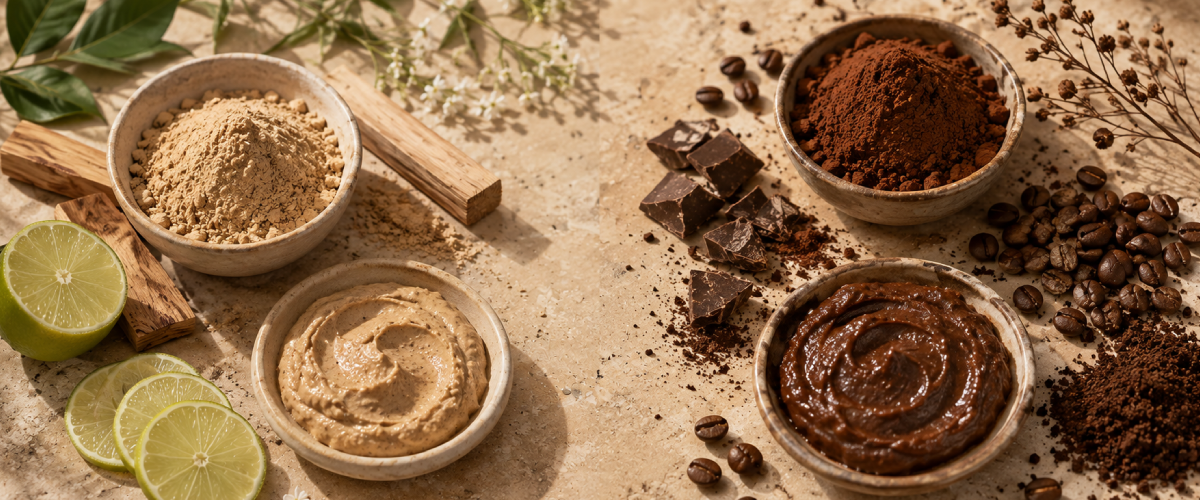
The best ubtan for your skin type comes down to what your skin needs most. Sandalwood & Lime is generally a better fit for oily, combination, and acne-prone skin looking for clarifying, brightening care. Cocoa & Café is generally a better fit for dry, very dry, and mature skin looking for deep hydration and barrier support. Normal skin can typically use either comfortably.
On This Page
Still not sure? Take the skin quiz for a personalized match.
Two people can ask the exact same question, “which ubtan should I get,” and need two completely different answers. That’s normal. Skin type changes what an ingredient does for you, and Om Mamah’s two 4-in-1 ubtans were built around genuinely different skin goals rather than being the same formula in two scents.
This guide walks through both products honestly, using only what’s actually in each formula and stated on their product pages, so you can match the ubtan to your skin instead of picking based on which jar smells better.
If you’ve never used an ubtan before, the idea of one jar doing four jobs can sound like marketing shorthand. In practice, it’s closer to how skincare worked before the modern multi-step routine became standard: a single, well-chosen paste, applied differently depending on how much time and intensity you want that day. The trade-off is that the formula has to actually fit your skin, since it’s doing more work across more of your routine than a single-purpose product would.
🔑 Key Takeaway
Sandalwood & Lime leans clarifying and brightening, built around sandalwood, lime, turmeric, and licorice root. Cocoa & Café leans hydrating and nourishing, built around coffee, cocoa, oats, and vitamin-rich butters. Your skin’s tendency toward oiliness or dryness is the single biggest factor in choosing between them.
What Is an Ubtan, and Why Does the Right One Matter?
An ubtan is a traditional Ayurvedic herbal powder or paste, historically ground fresh from ingredients like sandalwood, turmeric, and gram flour, used for cleansing and gently exfoliating the skin. Om Mamah’s versions are formulated as 4-in-1 products, meaning the same jar can function as a face wash, a scrub, a face pack, and, depending on the formula, a moisturizer-replacing step.
Because an ubtan touches your skin in four different ways across a week, the ingredient profile matters more than it would for a single-purpose product. A formula built for oil control applied to already-dry skin can leave it feeling tight. A rich, buttery formula applied to already-oily skin can feel heavy. This is the entire reason two ubtans exist in the first place.
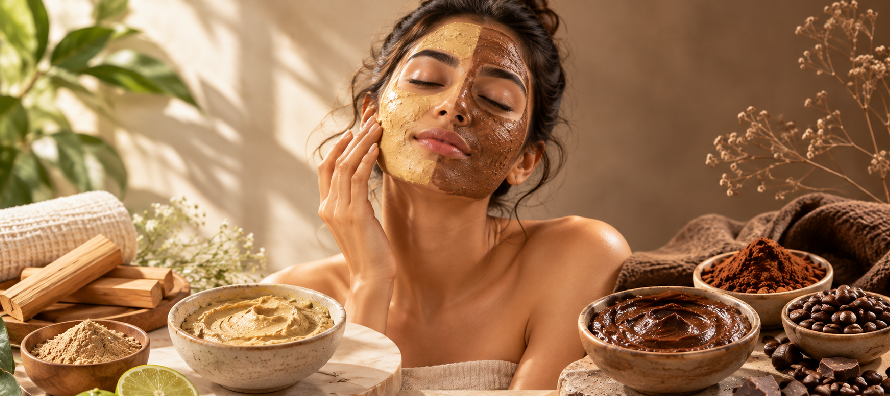
Om Mamah's Two Ubtans at a Glance
Sandalwood & Lime vs. Cocoa & Café, Side by Side
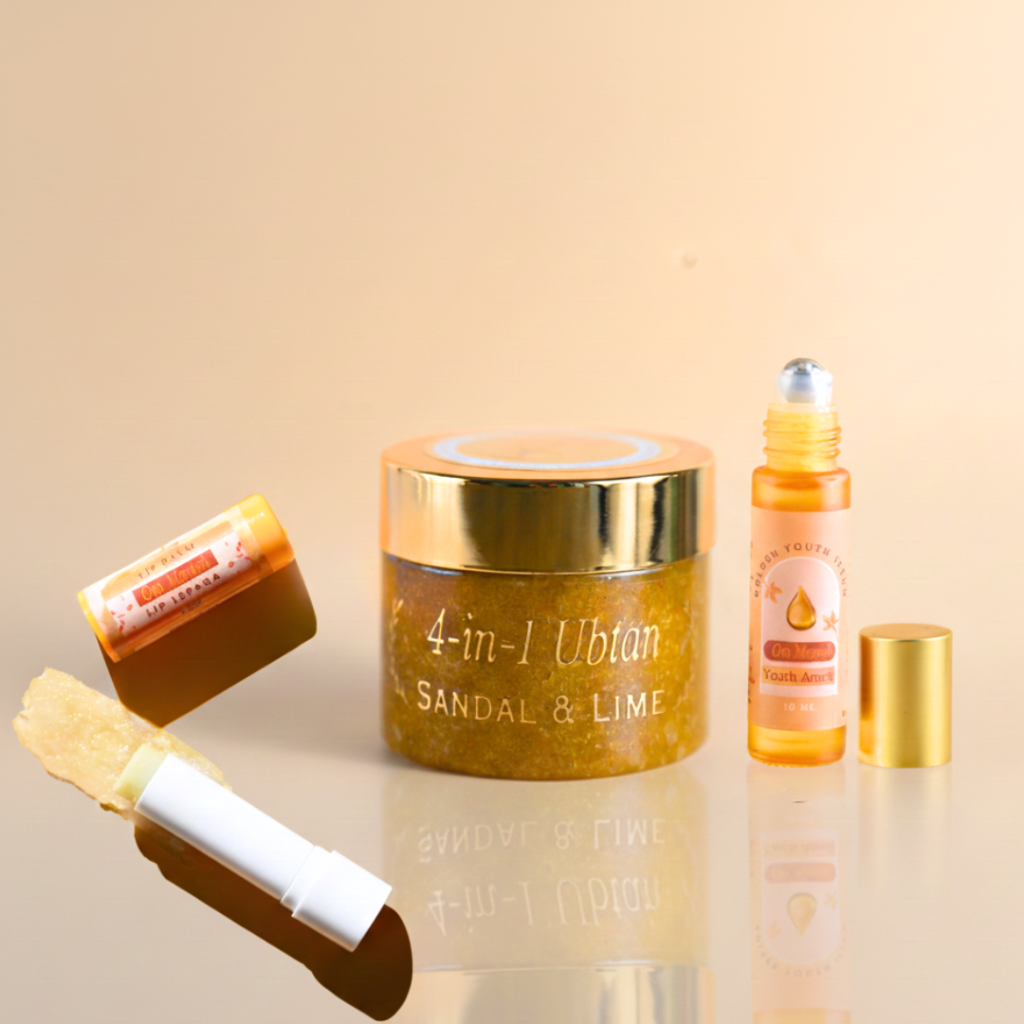
Sandalwood & Lime Ubtan
Clarifying · Brightening · Oil Balance
- Key ingredients: sandalwood, lime extract, turmeric, ashwagandha, licorice root
- Best suited for oily, combination, acne-prone, and normal skin
- Lighter, more mineral-forward texture
- Use 2-3x weekly as a scrub or mask, or daily as a quick face wash
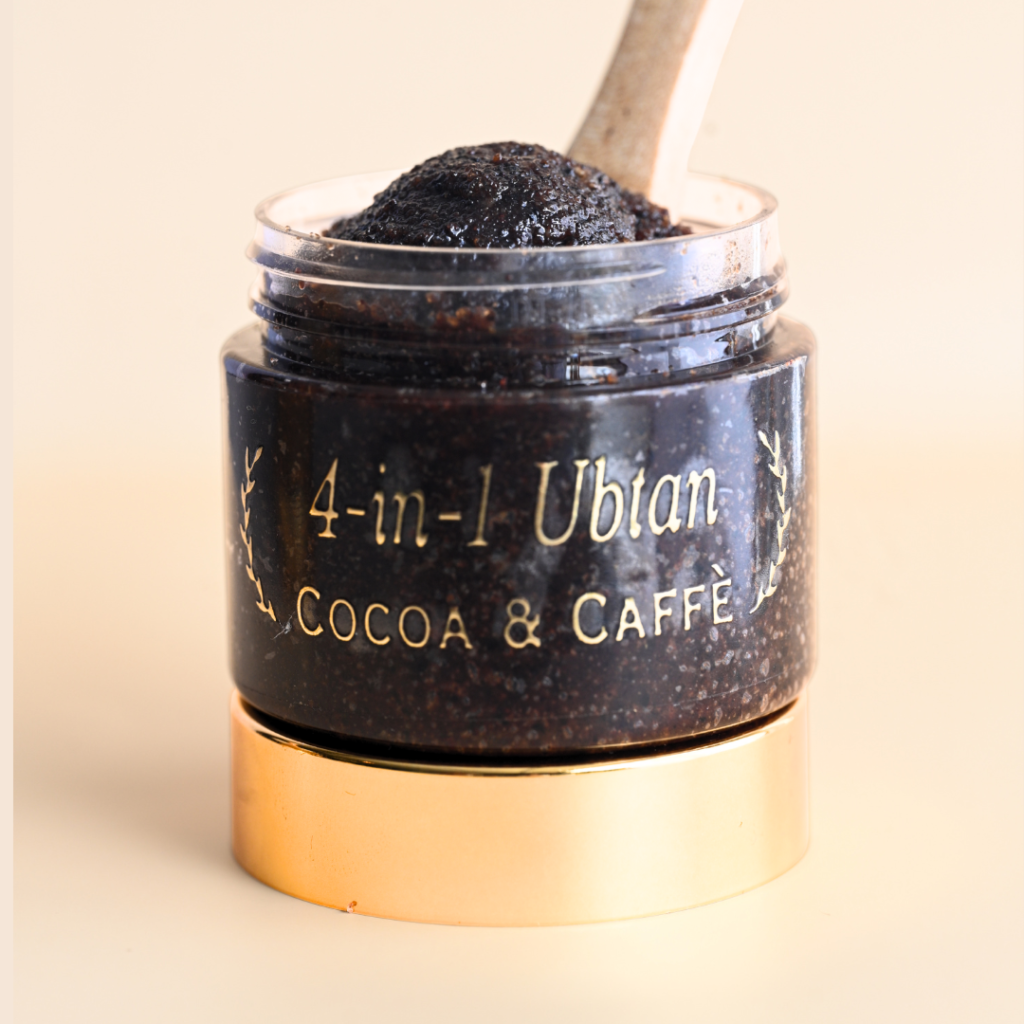
Cocoa & Café Ubtan
Hydrating · Nourishing · Barrier Support
- Key ingredients: coffee, cocoa, turmeric, ashwagandha, oats, rice, licorice, vitamin-rich butters and oils
- Best suited for dry, very dry, mature, and normal skin
- Richer, creamier, more cushioned texture
- Use 2-3x weekly as a scrub or mask, or daily as a quick face wash
Both are handcrafted in small batches in California, formulated without animal-derived ingredients, and free from parabens, sulfates, synthetic fragrance, and endocrine disruptors. The difference between them isn’t quality. It’s purpose.
Sandalwood & Lime vs. Cocoa & Café: Side-by-Side Comparison
| Factor | Sandalwood & Lime | Cocoa & Café |
|---|---|---|
| Core ingredients | Sandalwood, lime extract, turmeric, ashwagandha, licorice root | Coffee, cocoa, turmeric, ashwagandha, oats, rice, licorice, vitamin-rich butters & oils |
| Best-suited skin types | Oily, combination, acne-prone, normal | Dry, very dry, mature, normal |
| Primary goal | Brightening, clarifying, oil balance | Deep hydration, barrier support, softness |
| Texture | Lighter, more mineral-forward feel | Richer, creamier, more cushioned feel |
| Consider patch testing if… | Skin is very reactive or you're new to ubtans with active breakouts | Skin is sensitive to caffeine-based exfoliants or very reactive generally |
| Daily face wash use | Yes - damp skin, rinse off | Yes - damp skin, rinse off |
| Scrub frequency | 2-3x weekly (1-2x sensitive skin) | 2-3x weekly (1-2x sensitive skin) |
| Mask leave-on time | 5-15 minutes | 10-15 minutes for extra hydration |
“
The right ubtan isn’t the one with better reviews. It’s the one whose ingredient profile matches what your skin is actually doing this season.
Which Ubtan Is Best for Your Skin Type?
Here’s how each skin type tends to respond, based on the ingredient profiles above. These are general starting points, not a diagnosis, and your own skin’s response over a few uses is the real test.
Oily Skin
Sandalwood & Lime
The clarifying, lime-forward profile can be a better fit if your skin tends toward excess shine or feels congested by midday. Turmeric and licorice root are traditionally used in Ayurvedic skincare for oil-prone skin.
Dry Skin
Cocoa & Café
The cocoa butter and vitamin-rich oil base is designed to leave a nourishing layer that can reduce the need for a separate moisturizer, which tends to suit skin that feels tight, flaky, or dull.
Combination Skin
Either, With Adjustment
Combination skin can use either, but many people apply Sandalwood & Lime more on an oilier T-zone and Cocoa & Café more on drier cheek areas, or simply rotate between the two based on how skin feels that week.
Normal Skin
Either Works Well
Without a strong tendency toward oiliness or dryness, normal skin can comfortably use either formula. The choice becomes more about texture and scent preference than skin need.
Sensitive Skin
Either, Reduced Frequency
Both are described as gentle enough for sensitive skin at 1-2x weekly use. Patch test on a small area first and watch for redness or discomfort before adding either to a regular routine.
Acne-Prone Skin
Sandalwood & Lime
The clarifying ingredient set tends to align better with congestion-prone skin. This isn’t a treatment for acne as a medical condition, and active, inflamed breakouts should be introduced to gradually.
⚠ A note on expectations:
Neither ubtan treats, cures, or prevents any skin condition, including acne. Ingredient descriptions here reflect traditional Ayurvedic use and general cosmetic function, not clinical claims. If you have a diagnosed skin condition, check with a dermatologist before adding a new exfoliating product to your routine.
Key Ingredients Explained
Sandalwood
Used in Ayurvedic skincare for centuries, sandalwood powder has a naturally cooling, calming quality and is traditionally associated with brightening and evening out skin tone. It’s a core reason Sandalwood & Lime feels lighter and more mineral-forward than its counterpart.
Lime Extract
A natural source of Vitamin C, lime extract is included for its clarifying, refining effect, particularly relevant for oilier or congestion-prone skin. Citrus-based ingredients can be more activating on sensitive or compromised skin, which is part of why patch testing is worth doing if your skin is reactive.
Cocoa (Cacao)
Cocoa contributes fatty acids and antioxidants that give the Cocoa & Café formula its rich, cushioned texture. It’s chosen specifically for its ability to soften and nourish dry skin rather than for exfoliation.
Coffee
Finely-ground coffee acts as the physical exfoliant in the Cocoa & Café formula. It provides gentle mechanical exfoliation similar to other fine granular exfoliants, rather than functioning as a caffeine-based treatment.
Shared Ingredients: Turmeric, Ashwagandha, Licorice Root
Both formulas include turmeric, valued in Ayurveda for its calming, glow-supporting reputation, and ashwagandha, an adaptogenic herb traditionally associated with soothing stressed skin. Licorice root appears in both as well, commonly used in natural skincare for its role in supporting a more even-looking tone over time.
Oats and Rice: The Shared Exfoliation Base
Underneath the headline ingredients, both ubtans lean on finely milled oats and rice as their actual exfoliating texture. This matters more than it might seem. A lot of the difference in how “gentle” or “intense” an exfoliant feels comes down to particle size and shape, not just which specialty ingredient gets top billing on the label. Oats and rice are naturally soft-edged compared to something like ground walnut shell or apricot pit, which is part of why Om Mamah describes both formulas as workable for sensitive skin when used less frequently, even though one leans clarifying and the other leans hydrating.
Choosing by Goal, Not Just by Skin Type
Skin type is the biggest factor, but it isn’t the only one. Someone with normal skin chasing brighter, more even tone will likely get more out of Sandalwood & Lime regardless of skin type, since that’s the formula built around lime and turmeric’s traditional brightening role. Someone with normal skin whose main complaint is dullness or rough texture from dryness, even mild dryness, may still prefer Cocoa & Café for the softness it leaves behind. It’s worth asking yourself what you actually want to notice in the mirror in four weeks, not just which skin-type box you check.
Did You Know?
Both ubtans also include oats or rice as part of their gentle exfoliation base. These grain-based ingredients are considerably softer than harsh mechanical scrub particles like walnut shell, which is part of why both formulas are described as suitable for sensitive skin at reduced frequency.
How to Use Each Ubtan
The application method is nearly identical for both, which makes it easy to switch between them without relearning a routine.
1
Daily face wash
Apply a small amount to damp skin and rinse off right away – no leave-on time needed.
2
2-3x weekly scrub
Massage gently in circular motions for 1-2 minutes before rinsing for a deeper exfoliating effect.
3
Occasional mask
Apply a thicker layer and leave on 5-15 minutes (up to 15 for Cocoa & Café in dry climates) before rinsing.
🌿 Expert Tip
If you’re introducing either ubtan for the first time, start with the daily face wash mode for the first week before moving to the deeper scrub or mask application. This gives your skin a chance to adjust gradually rather than starting with the most intensive use case.
Myth vs. Fact
Myth
The richer formula is always the “better” one.
Fact
Richness is a fit issue, not a quality issue. Cocoa & Café’s richness is exactly what makes it feel heavy on oily skin and ideal on dry skin.
Myth
Coffee-based exfoliants are too harsh for daily use.
Fact
The coffee here is finely ground and used gently. The daily face-wash mode skips the exfoliating step entirely, reserving scrubbing for 2-3x weekly.
Myth
You have to pick one and stick with it forever.
Fact
Skin needs shift with seasons and life stages. Switching or rotating between the two as your skin changes is completely reasonable.
Can You Use Both Ubtans?
Yes. There’s no ingredient conflict that would prevent alternating between them, and plenty of people find real value in keeping both on hand. A common approach: Sandalwood & Lime on days skin feels oilier or congested, Cocoa & Café when skin feels dry, tight, or dull, especially useful for combination skin or seasonal shifts between humid summers and dry winters.
Quick Pre-Oiling Checklist
- Skin feels oily or shiny by midday → lean Sandalwood & Lime
- Skin feels tight, flaky, or dull → lean Cocoa & Café
- Skin changes with the seasons → consider keeping both
- Skin is reactive or new to ubtans → start with the daily face-wash mode of either, patch test first
- Main goal is brightening and tone → Sandalwood & Lime
- Main goal is hydration and softness → Cocoa & Café
Find Your Fit
Explore both ubtans and see which one your skin prefers
Every Om Mamah ubtan is handcrafted in small batches with the same care, just built for different skin goals. Browse both and start with the one that matches what your skin needs most right now.
Frequently Asked Questions
It depends on what your skin tends to do. Sandalwood & Lime tends to suit oily, combination, and acne-prone skin well due to its clarifying, lime-forward profile, while Cocoa & Café tends to suit dry, very dry, and mature skin due to its richer, butter-based hydration. Normal skin can typically use either comfortably.
Yes, many people rotate between the two depending on season or how their skin feels that week - Sandalwood & Lime on days skin feels oilier or congested, Cocoa & Café when skin feels dry or tight. There's no ingredient conflict that would prevent alternating between them.
Its clarifying ingredients, including lime extract and turmeric, are commonly used in Ayurvedic skincare for oily and congestion-prone skin. It isn't a treatment for acne as a medical condition, and anyone with active, inflamed breakouts should introduce it gradually and consider patch testing first.
Not necessarily, but combination skin with an oilier T-zone may prefer applying it more heavily on drier cheek areas and more lightly across the T-zone, or reserving it for use as an occasional hydrating mask rather than a daily face wash.
A traditional ubtan is a multi-functional herbal powder or paste that can work as a cleanser, physical exfoliant, and mask depending on how it's applied and how long it's left on, rather than being formulated for a single step the way a typical single-purpose scrub is.
Finely-ground coffee is used here mainly as a gentle physical exfoliant rather than as a caffeine treatment, but sensitive or reactive skin should still patch test and consider starting with once-weekly use to see how the skin responds before increasing frequency.
Yes, both are described as usable in a quick, damp-skin, rinse-off mode for daily cleansing, with the deeper scrub or mask application reserved for 2 to 3 times a week.
Sandalwood & Lime's ingredient profile, including lime extract and turmeric, is traditionally associated with brightening and tone-evening use in Ayurvedic skincare, making it the more relevant option for that specific goal, though visible results vary by individual and consistency of use.
Both are formulated to be gentle enough for sensitive skin at a reduced frequency of 1 to 2 times weekly, but anyone with very reactive or easily irritated skin should patch test on a small area first and watch for redness or discomfort before regular use.
Many users find the vitamin-rich oils and butters in the Cocoa & Café formula leave enough of a nourishing layer that a separate moisturizer isn't needed immediately afterward, though very dry climates or skin conditions may still benefit from additional hydration.
Yes, both the Sandalwood & Lime and Cocoa & Café Ubtans are formulated without animal-derived ingredients and are not tested on animals, and are free from parabens, sulfates, synthetic fragrance, and endocrine disruptors.
Ingredient and usage information in this article is drawn directly from Om Mamah’s published product pages for the Sandalwood & Lime and Cocoa & Café Ubtans. Individual skin response varies, and this guide is not a substitute for advice from a dermatologist, particularly for diagnosed skin conditions like acne or eczema. For general reference on exfoliation and sensitive skin care, see resources from the American Academy of Dermatology.